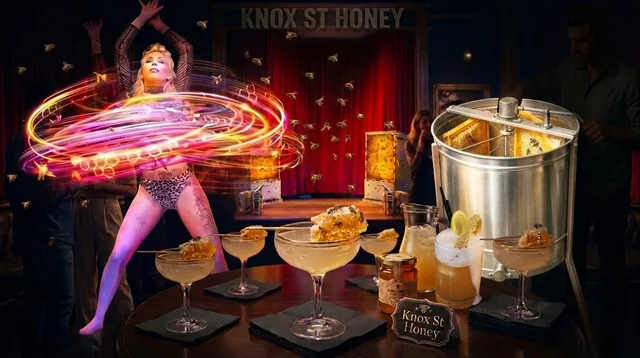
Knox Street Bar is the kind of place you stumble into once and keep coming back to. We're a venue known for a tight-knit arts community and seriously good cocktails made with honeycomb from our very own rooftop beehives.
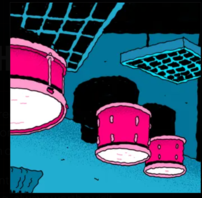
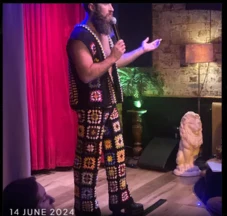
On our intimate Drum Room stage you'll find live music, animation screenings, storytelling and burlesque, always changing, always worth a visit.
Drop in for a drink, catch a live show, or book the Drum Room or the entire space for your next event.
We're always on the lookout for something new. If you've got an event idea or a pitch, we'd love to hear it.
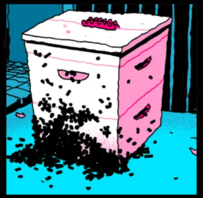
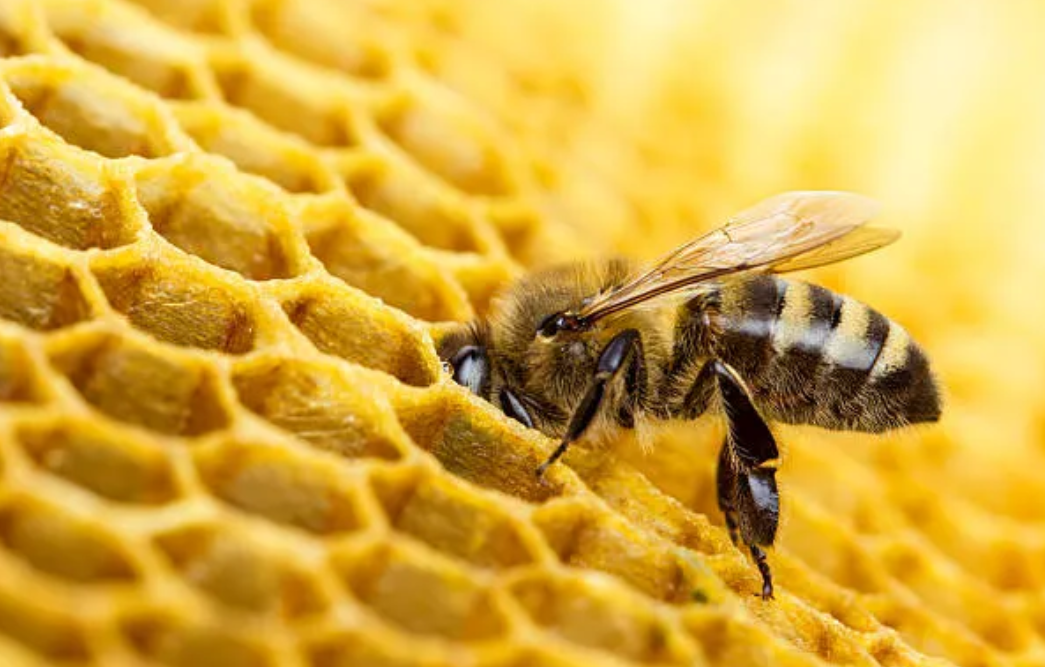
Four storeys above Knox Street, something quite extraordinary is happening. Tucked onto the rooftop of our venue are beehives, home to tens of thousands of bees who have made Chippendale their territory, foraging across the gardens, parks and flowering streets of inner Sydney to create something genuinely special.
This is urban beekeeping, and after a decade of tending our hives, we can tell you the honey they produce is unlike anything else.
Our Hives
We keep two hives on the rooftop, each led by their own queens — Barbara and Mary. While a worker bee lives for just six weeks, working themselves quite literally to death, a queen can live for three to five years, spending her days doing one thing: laying eggs. And she does it at a remarkable pace — up to 2,000 eggs a day at peak season — meaning a single queen can be responsible for millions of bees across her lifetime. She is the heartbeat of the hive.
To keep track of Barbara & Mary among the thousands of bees in each hive, we mark them with a small dot of paint on their thorax. This year in yellow, the internationally recognised colour for queens born in 2026. It sounds like a small thing, but finding a marked queen in a full, busy hive is one of the quiet satisfactions of beekeeping. Beyond identification, watching the queen tells you everything about the health and rhythm of the hive.
Urban bees are remarkable foragers. Without the monocultures of commercial agriculture around them, they roam freely across a rich and varied landscape of flowering trees, rooftop gardens, window boxes and community plots, drawing nectar from thousands of different sources. The result is a honey that is complex, layered and constantly evolving with the seasons.
Sydney’s dense inner-city gardens, abundant street trees and near year-round flowering climate make it one of Australia’s most natural fits for urban beekeeping. Rooftop hives have become an increasingly common sight above the inner city, part of a broader movement that Knox Street Bar has been part of from early on.
Every Bee Has a Job
A healthy hive is a masterpiece of organised labour — every bee has a job.
The Queen: the sole egg-layer, her only role is reproduction.
Worker bees: all female, they make up most of the hive and rotate through roles as they age: nursing larvae, building and maintaining comb, guarding the entrance, and foraging for nectar, pollen and water.
Foragers: experienced workers who venture out to collect nectar and communicate its location back to the hive through the waggle dance.
Nurse bees: tend to the eggs and larvae, feeding them and regulating the temperature of the brood.
Guard bees: stationed at the entrance, they inspect every returning bee and repel intruders.
Drone bees: the only males in the hive, they do no foraging, no building and no guarding. Their sole purpose is reproduction — each day in good weather they fly to a Drone Congregation Area, a patch of sky where drones from across the neighbourhood gather and wait for a virgin queen to pass through.
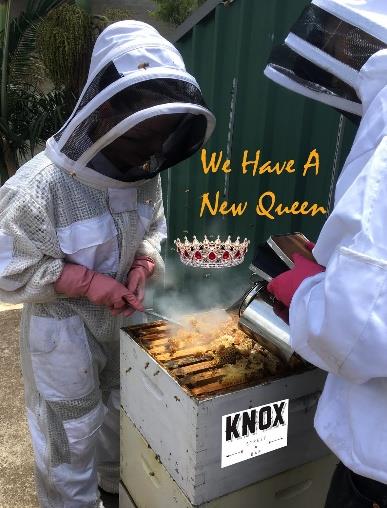
A New Queen
A new queen is created when the hive collectively decides it needs one. There are two situations that trigger this. The first is swarming: when a colony grows strong and populous enough, the existing queen will leave with roughly half the workers to find a new home — an extraordinary airborne exodus that can look alarming but is a sign of a thriving, healthy hive. Before she goes, the workers prepare for her departure by building special queen cells.
The second situation is when the existing queen begins to fail, laying less reliably or showing signs of age or illness. The workers will quietly raise a replacement without swarming, allowing the old queen and her successor to briefly coexist before the new queen takes over. Once she is laying reliably, the old queen is usually killed by the workers or simply fades and dies.
The Harvest & The Spin
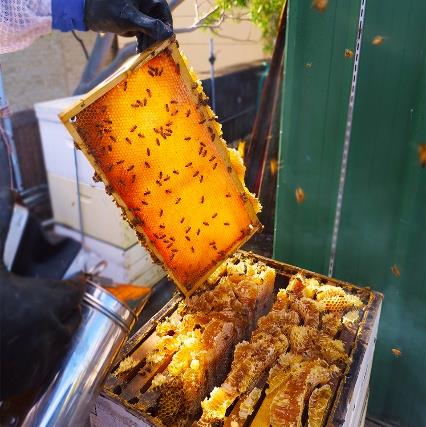
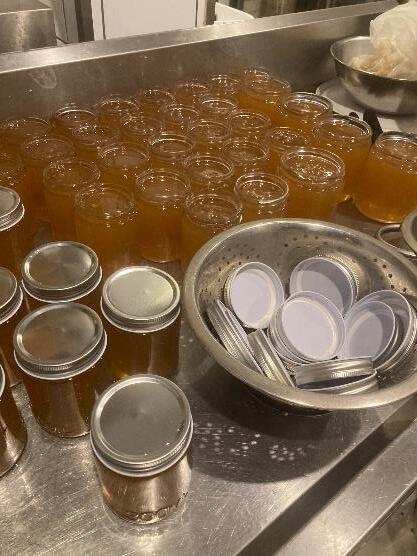
We harvest twice a year, following the natural rhythm of the hive and the seasons. When the heavy frames are ready (typically 2–2.5kg each), we bring them down from the rooftop to our kitchen for extraction. Each of our hives produces around 50kg of raw, character-filled honey every year.
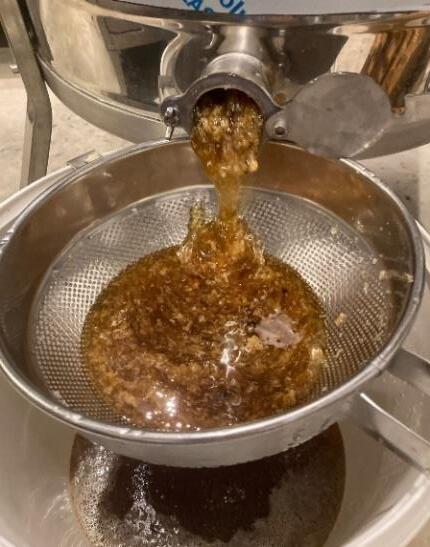
To get the honey out, we load the frames into a traditional extractor. This honey spinner uses centrifugal force to draw the honey out of the comb without destroying it. It’s an incredibly satisfying process: as the frames spin, the honey flies to the walls of the drum and runs down into the tank below. Because the comb itself is left mostly intact, we can send it right back up to the rooftop so the bees can clean it and fill it all over again. Nothing is wasted.
As Local As It Gets
If you’ve only ever tasted commercial honey, our rooftop harvest will be a revelation. Urban honey has a terroir all its own — lighter in colour and more fragrant in flavour than anything mass produced; floral, delicate and nuanced in a way that reflects exactly where our bees have been roaming. It carries the character of the neighbourhood itself, and there are few better examples of the locavore ideal than honey made four storeys above the bar it’s served in.
There’s no blending, no pasteurisation, no standardising. What you taste is exactly what the bees made.
Honey Infused Cocktails
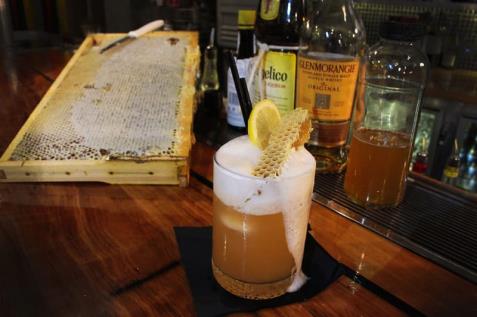
Our rooftop honey inspires three cocktails on the menu, each one a little different in character.
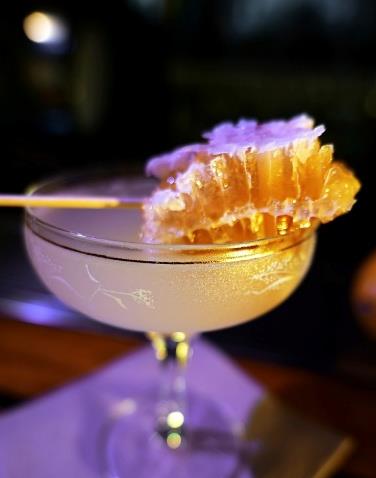
The Lavender Bees Knees pairs Hendrick’s gin with fresh lemon juice, lavender bitters and honeycomb — floral, sharp and elegant, riffing on a Prohibition-era classic that has never really gone out of style.
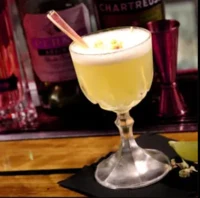
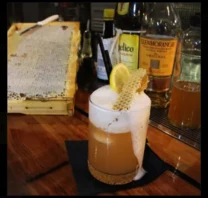
The Honeycomb Whisky Sour is the richer, warmer sibling — Monkey Shoulder whisky shaken with fresh lemon juice, honey, egg whites and bitters, finished with a honeycomb garnish. It’s the kind of drink that makes the honey the hero rather than just a sweetener.
The Honey Refresher holds its own for those skipping the alcohol — Four Pillars Bloody Shiraz botanicals with grapefruit juice, soda and a grapefruit twist, lifted by honey into something genuinely worth ordering.
What’s in the glass on any given night also reflects exactly what was flowering across Chippendale when the honey was harvested, which means no two batches are quite the same — and neither, subtly, are the drinks. If you’d like to take a jar home, our honey is available for sale at the bar.
Ask us about our rooftop honey — we’re always happy to talk bees.